How a reader or a poet reconstructs one Georgia soldier from enlistment entries, state pension applications and county rolls, and which of those records are already online.
New collection notes
Fresh notes on poems, sources, form and the lived history behind them.
What Baptists believe about immersion, how a Baptist service runs from hymn to benediction, and how American Baptists differ from Southern Baptists.
A wild buckwheat is not the grain in your pantry. How to spot Eriogonum on a hike by flower, leaf and involucre, and which species to plant first in a dry
The Be On Our Side campaign put pro-Palestinian posters in American transit systems from 2010 to 2012, and counter-ads answered them in 2011.
Día, El día de los niños / El día de los libros, is celebrated on April 30. Its origin in Mexico, Pat Mora's 1996 idea and how libraries mark it.
A plain guide to children's writing and illustration in North and South Carolina: manuscript craft, submission, critique groups and regional support.
When bowling, track and field, and golf seasons start in U.S. high schools, plus what tryouts, Baker format competitions, practices and meets involve.
The Latin Monetary Union ran from 1865 to 1927. Its silver and gold coins still sit in dealer trays today, and the records explain why.
A practical look at family roles in alternative weddings: seating limits, no-procession rehearsals, and the paperwork that decides who may officiate.
How to identify a traditional missal by its title page, how rosaries and scapulars are made, and how to store and hand on old devotional objects.
Civil War Haiku
Seventeen syllables is not much room for a war that lasted four years and killed more Americans than every other American war combined. That is the point. A haiku cannot summarise the American Civil War, so it stops trying, and holds one thing instead: standing corn in September, a hat filling with rain, a stone wall nobody reached.
Almost every poem here was written for this collection; the few quoted from published books are marked and their authors named. Every image behind a poem is sourced to a date, a place or a ration, and the source is named on the page that carries it.
1Where to begin
Six ways in
- Civil war haiku poems The main gathering
-
Twenty poems arranged by ground rather than by date: enlistment and camp, the field, hospital and prison, after. Each one carries a short note saying which fact it rests on. Start here if you came for the poems and not for the argument.
- The form, explained Read before writing
-
Why the schoolroom count of five, seven, five is a rough translation rather than a rule, what a season word does, and how a haiku differs from a senryu or a tanka. the count, the season word, the cut
- Haiku poems about Gettysburg 01 to 03/07/1863
-
Three days, three sets of images: ripe wheat and heat on the first day, boulders and a wheatfield on the second, a mile of open ground on the third. Written to be read in the order the fighting happened.
- A Fredericksburg battle poem 11 to 15/12/1862
-
Winter, a stone wall, a sunken road, and the aurora that soldiers of both armies reported seeing on the night of 14/12/1862. The hardest ground in the collection to write about without raising the voice.
- Civil war soldier life poems Camp, march, ration
-
Most of a soldier's war was not battle. It was coffee, hardtack, mud, mail call, boredom and disease, which killed roughly twice as many men as combat did. The poems follow the ordinary day.
- Civil war poetry examples for students Classroom sequence
-
A five step lesson, twelve prompts tied to real detail, six worked student level examples, and the four ways a Civil War haiku usually fails in a classroom.
Six short poem forms for the American Civil War: haiku, senryu, tanka, the American cinquain, the epitaph and the found poem, each with a worked example and its rules.
Civil War and haiku terms in one alphabet, from canister and hardtack to kigo and shasei, followed by six kinds of record and the sixteen works behind this collection.
For readers who want to read photographs, letters and local records with care, gathers German-language essays on uniforms, migration, village teachers and the everyday objects that carry a place's history.
For the hours between readings, covers ages 1 to 10 with sensory play, role play and step projects, plus rainy day kits and birthday plans, all using materials already at home.
For readers who want the documentary record behind claims about perception, gathers session methods, declassified STARGATE files and critical notes on replication, without promising results.
2Five poems
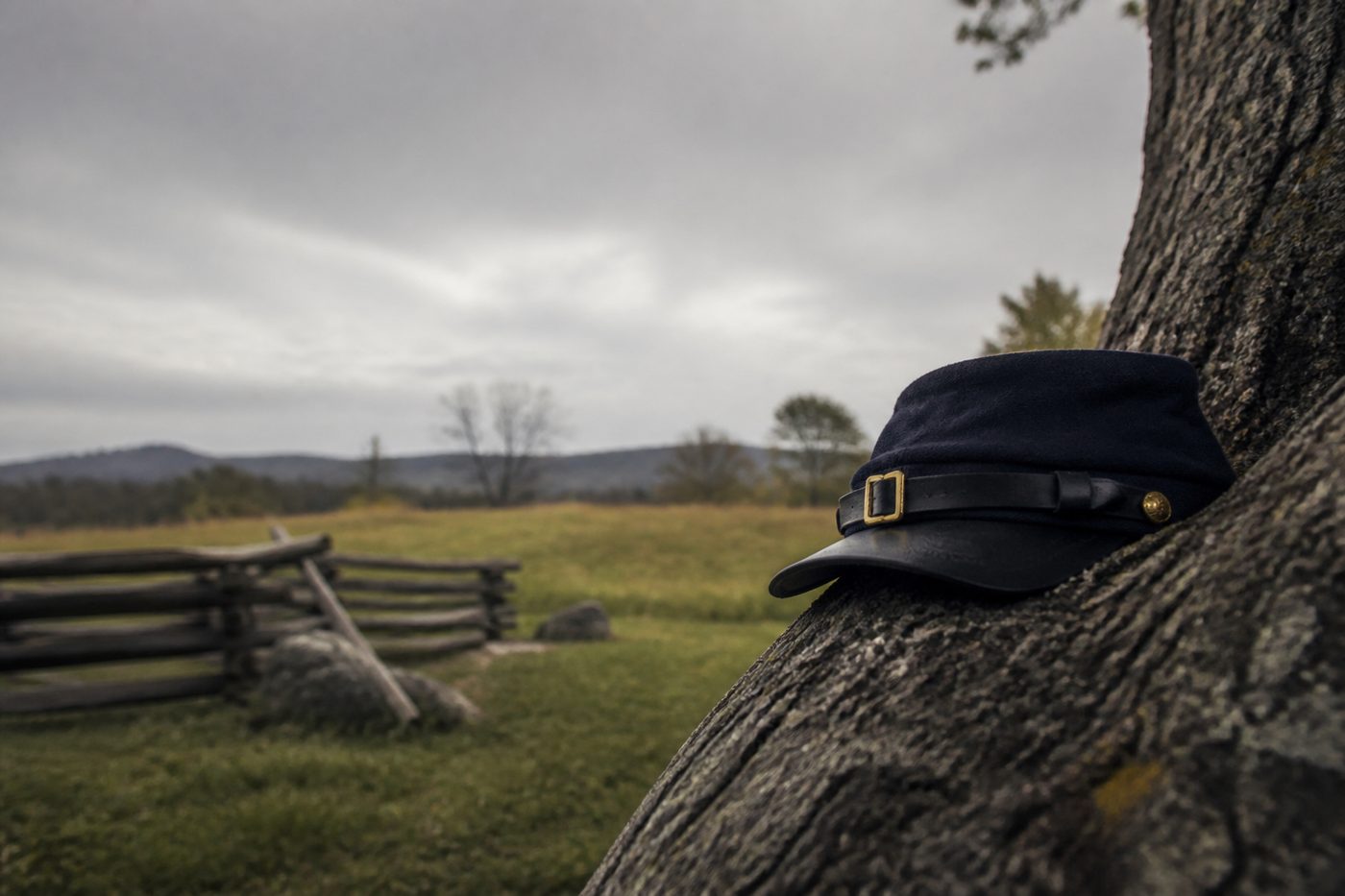
One from each part of the war
courthouse steps in April
Written for this collection. Ground: volunteer enlistment, spring 1861.
a boy signs his name twice
to get it right
September cornfield
Written for this collection. Ground: Antietam, 17/09/1862.
the rows still standing
where no one is
cold ground, red sky
Written for this collection. Ground: the aurora reported at Fredericksburg, 14/12/1862.
both armies looking up
at the same lights
ripe wheat in July
Written for this collection. Ground: Gettysburg and the rain of 04/07/1863.
a hat left in the furrow
brim full of rain
stacked rifles, apple bloom
Written for this collection. Ground: the surrender at Appomattox Court House, 09/04/1865.
the road home longer
than the road out
- The rest of the poems, grouped by ground
- Haiku about war and loss
- For readers who want the calendar behind the dates, the Orthodox liturgical year guide sets out fixed and movable feasts, the Pascha to Pentecost sequence, daily offices, church layout and icon reading.
- For readers who trace a regiment past the muster roll, the archive at Latter-day Saints in Taiwan history gathers dated mission milestones, chapel and temple records, Chinese hymns and member figures, each tied to a document.
3Ground the poems keep returning to
Eight fixed points
A short poem needs a place it can stand on. These eight are the ones this collection uses most often, with the images that survive in the letters and reports written at the time.
Two of the eight land on the same date. The rain that fills the hat in the Gettysburg poem fell on 04/07/1863, and Vicksburg surrendered that same morning eight hundred miles west. It is a strange thing to hold: the country's birthday and its worst summer, on one page of the calendar. Thirty miles east of the wheatfield, York County still keeps the date as a plain civic holiday, and York Fourth records what that looks like now, parade route and fireworks time and all, in the same towns Confederate columns passed through ten days before the battle.
| Battle or event | Dates | Casualties, both sides | Images that recur |
|---|---|---|---|
| Fort Sumter | 12 to 13/04/1861 | No deaths in the bombardment | Brick casemates, harbour fog, a flag taken down |
| First Manassas, or Bull Run | 21/07/1861 | About 4,700 | Dust, a stone bridge, civilian carriages |
| Shiloh | 06 to 07/04/1862 | About 23,700 | Peach blossom, a pond, night rain |
| Antietam | 17/09/1862 | About 22,700 in one day | Standing corn, a sunken lane, a stone bridge |
| Fredericksburg | 11 to 15/12/1862 | About 17,900 | A stone wall, frozen mud, the northern lights |
| Gettysburg | 01 to 03/07/1863 | About 51,000 | Ripe wheat, boulders, a low stone angle |
| Vicksburg, siege | 18/05 to 04/07/1863 | About 4,800 in the assaults | Caves cut in a bluff, river fog, July heat |
| Appomattox Court House | 09/04/1865 | Surrender, no general engagement | Stacked arms, apple trees, spring mud |
Wide table: scroll sideways to read it all.
Casualty figures count killed, wounded, captured and missing together. Sources differ, sometimes by thousands. The round numbers above are the ones most often cited by the National Park Service and by standard one volume histories.
4What counts as a Civil War haiku here

Five tests
A poem gets into this collection when it passes all five of these. They are house tests, not laws of the form, and they exist mainly to keep the writing honest.
- One image, held. The poem shows a single thing long enough for the reader to see it. Two images are allowed only if the second one cuts against the first.
- A season the calendar can carry. The war has a diary. If a poem says frost, it must be a month when there was frost.
- A fact underneath. A ration, a place name, a weather report, a date. Something a reader could go and check.
- No verdict. The poem does not tell the reader what to feel about the war. It gives the reader something to feel it with.
- Nothing dressed up as a record. No poem here pretends to be a soldier's own verse, or a line from a real letter.
House rule on attribution
- Poems written for this collection are marked as such under every one of them.
- Poems quoted from published books are marked separately and their author is named.
- Quotations from soldiers, officials and reporters are dated and attributed in the running text.
- How the form does the work
- Terms used across the collection
- Books and archives behind the facts
- For the mine warfare side of the Pacific, USS Phoebe deck logs traces one coastal minesweeper through muster rolls, photo provenance and Sasebo service records.
- For the card games that filled camp evenings between marches, a guide to Euchre and Pinochle rules covers scoring, bidding, table formats from eight to sixty-four players, and how the night was organized.